
Laser skin resurfacing, ablative and nonablative
Laser skin resurfacing splits into ablative and nonablative approaches, and this hub explains how the sources set them apart. Whether the concern is lines, scars or tone, it comes before the choice of laser.
The lasers the sources name
Cleveland Clinic's overview of laser resurfacing begins with carbon dioxide (CO2) and erbium lasers. It says erbium laser resurfacing is designed to remove superficial and moderately deep lines and wrinkles on the face and should require only local anesthetic.
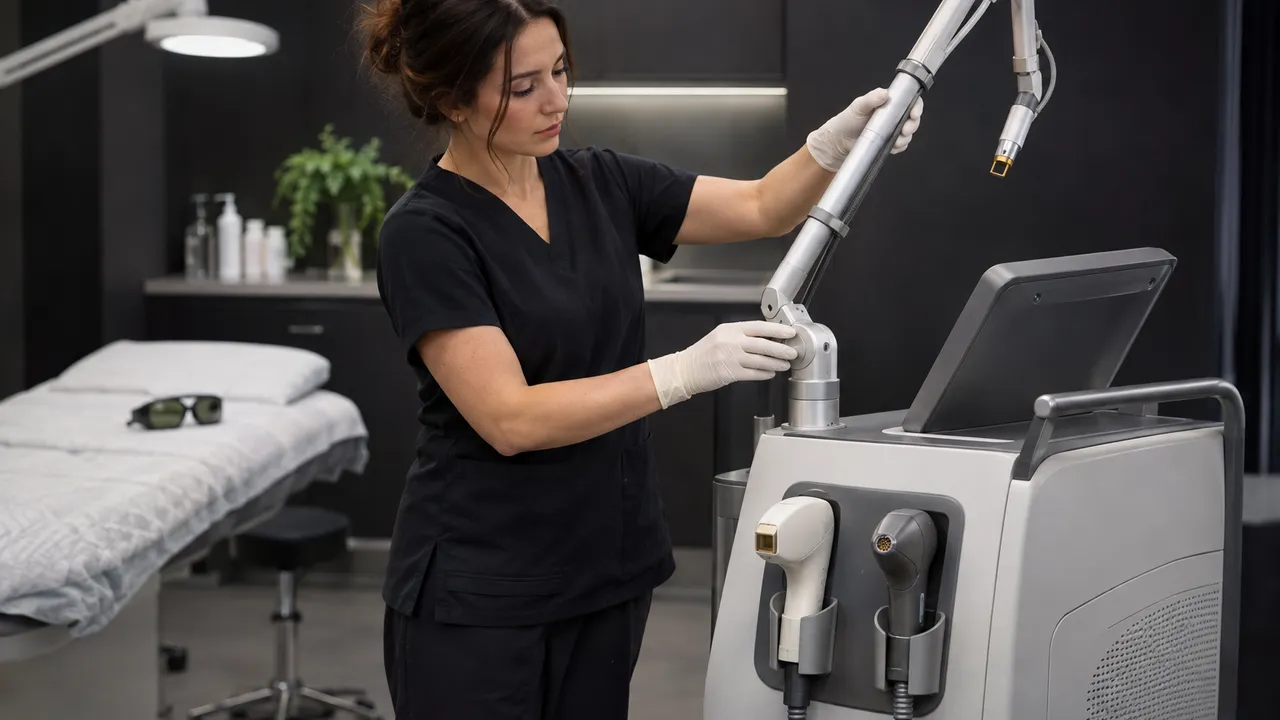
If lines are your main concern, MedlinePlus has an entry on wrinkles. Both lasers are named in Cleveland Clinic's laser skin resurfacing guide, the source for this section.
The milder option and what it asks of you
The American Society of Plastic Surgeons notes that since non-ablative laser treatments are milder, you may need several treatment sessions to see optimal results.
Its page on skin rejuvenation and resurfacing covers the wider set of options.
If scars are the concern
Before you decide which laser to ask about for scars, DermNet's page on acne scarring describes the scar types.
Read next, from first look to recovery
Start with Fractional lasers for tone and texture for a first look at the approach. Then read CO2 laser resurfacing and its recovery to plan for healing time.
Readers whose main concern is color rather than texture can turn to the sun spots and age spots hub or the BBL and IPL photofacial hub.